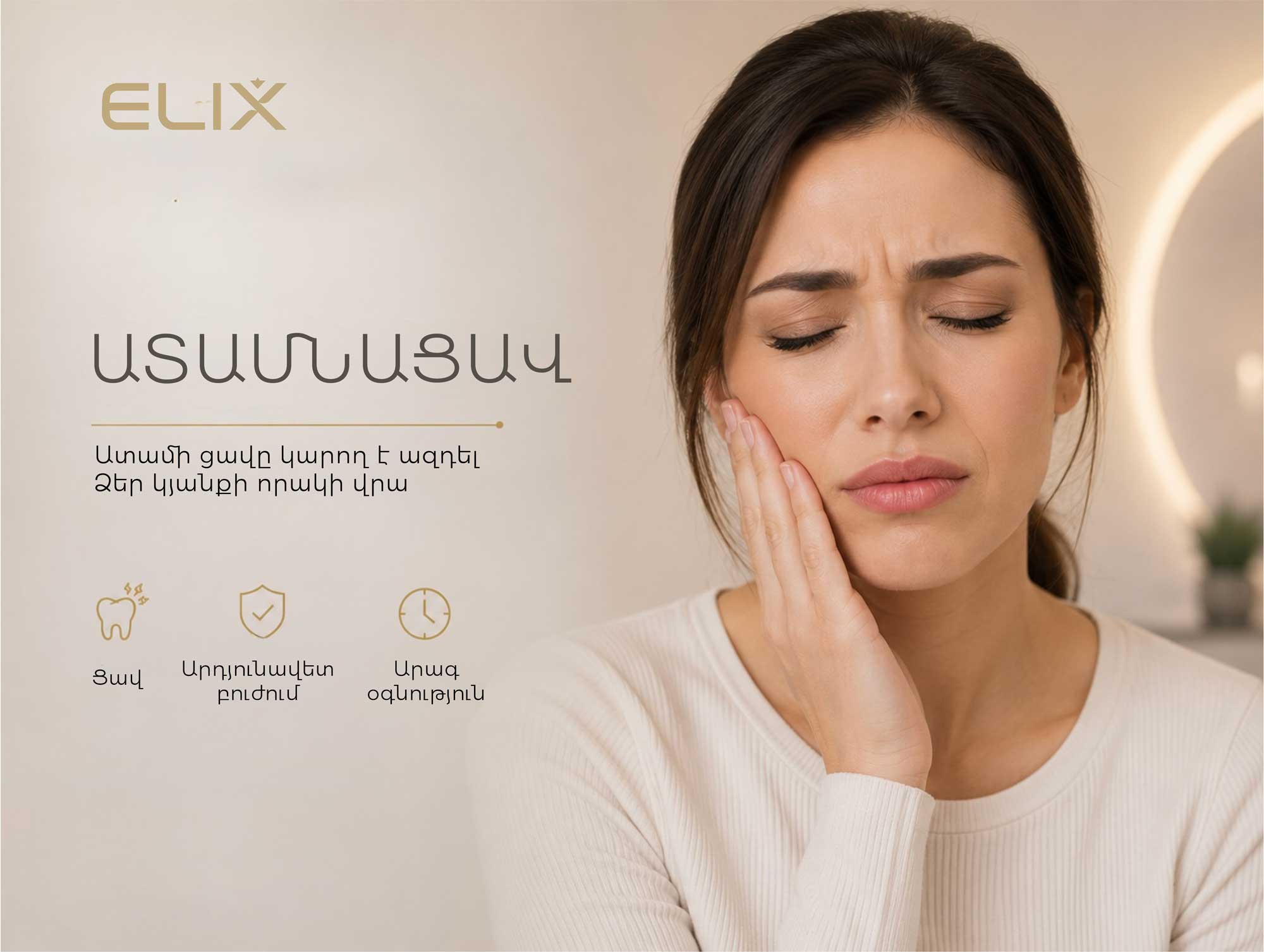
Toothache
Toothache can occur suddenly and be of various types: sharp, throbbing, continuous or only when chewing, cold and hot food. The causes of pain are also different, ranging from tooth sensitivity to caries or inflammation of the periodontal tissues.
It is possible to temporarily relieve toothache at home, but it is important to remember that home remedies do not eliminate its cause. In case of repeated or severe pain, it is necessary to consult a dentist.
Why does a tooth hurt?
The most common causes of toothache are:
➫ caries
➫ inflammation of the tooth nerve
➫ infection of the tissues surrounding the tooth or root
➫ a crack or injury to the tooth
➫ a damaged or old filling
➫ inflammation of the gums
➫ problems with wisdom teeth
➫ high tooth sensitivity.
The real cause of pain is not always possible to determine by symptoms alone. During a dental examination, an X-ray may also be taken if necessary.
What to do if you have a toothache?
If you can’t see a dentist right away, there are a few simple things you can do to temporarily reduce pain and discomfort until you can.
Saltwater gargle - Dissolve about half a teaspoon of salt in a glass of warm water and rinse your mouth. This can help clean your mouth and relieve gum irritation.
Cold compress - If your pain is accompanied by swelling, you can apply a cold compress wrapped in a cloth to the outside of your cheek for a short time. Ice should not be placed directly on the tooth or gum.
Oral hygiene - Brush your teeth and interdental spaces carefully. Sometimes food particles can further irritate the painful area.
Avoid irritating foods - Very hot, cold, sweet, or hard foods can make the pain worse, so it's a good idea to limit them until you see a doctor.
Painkillers can also temporarily reduce pain, if the medication is safe for you and taken as directed. However, they don't treat the cause of the pain.
What not to do for a toothache?
It is not recommended to take antibiotics on your own for a toothache. Antibiotics are only necessary in certain cases and as prescribed by a doctor.
You should also not put aspirin or other medications directly on the aching tooth or gum, as this can irritate or damage the tissues.
If there is swelling, it is not advisable to heat the painful area without a doctor's advice.
Why does toothache sometimes get worse at night
For some people, toothache becomes especially pronounced at night and can even interfere with sleep. Severe, throbbing, or prolonged nighttime pain may be related to a problem within the tooth or surrounding tissues.
Even if the pain subsides after taking painkillers, the problem may persist and recur.
When to see a dentist?
A visit to the dentist should not be delayed if the toothache is severe, recurring, or lasts a long time. It is especially important to seek medical attention quickly if the pain is accompanied by swelling of the gums or face, fever, pus, or difficulty opening the mouth.
In case of rapidly increasing swelling of the face or neck, difficulty breathing, or swallowing, urgent medical attention is necessary.
Treatment of toothache begins with identifying its cause. Depending on the diagnosis, caries treatment, tooth restoration, root canal treatment, or other dental procedures may be necessary.
Home remedies can temporarily relieve the condition, but correct diagnosis and appropriate treatment are necessary to eliminate the cause of the toothache.