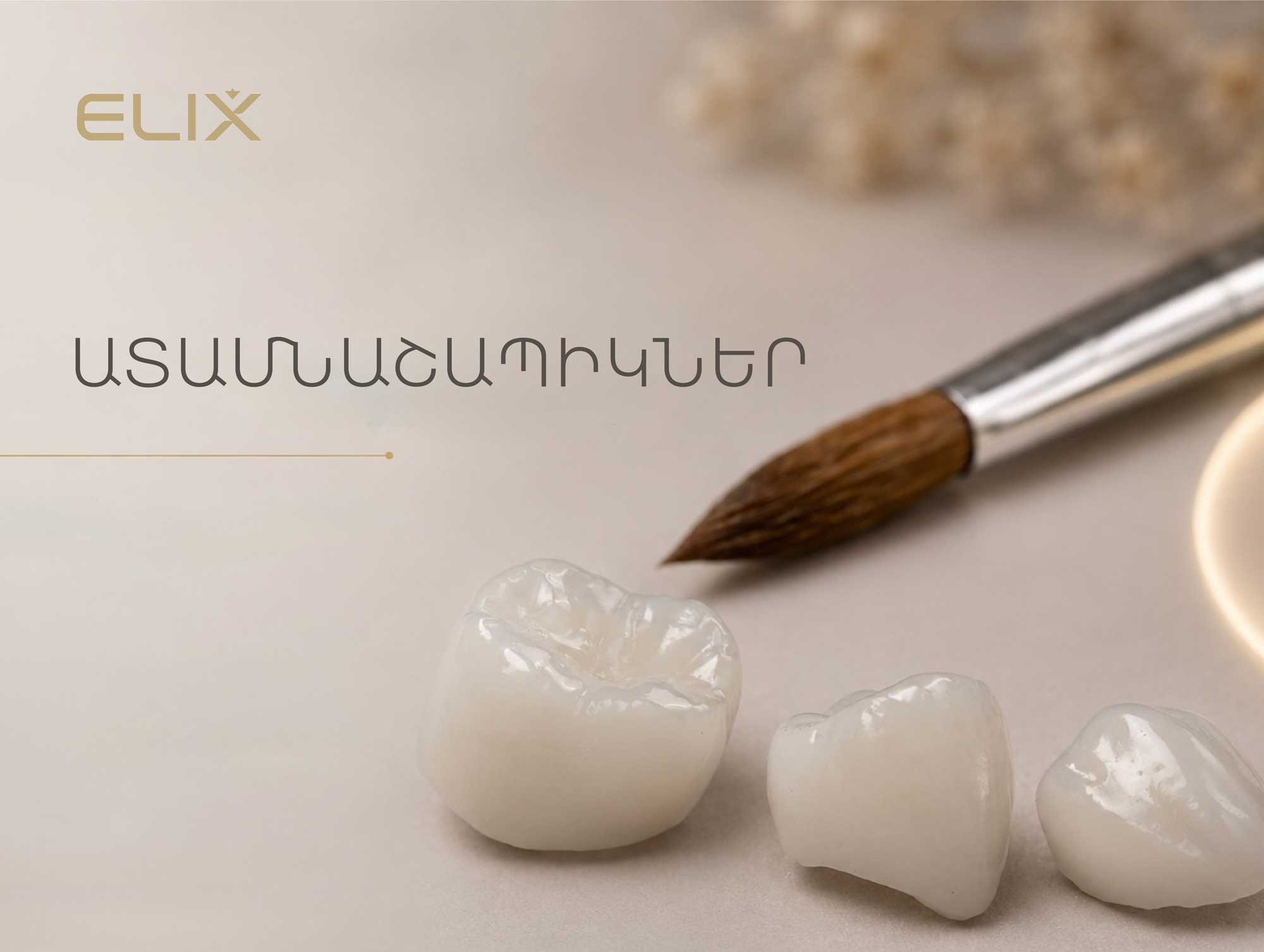
Dental crowns
Dental crowns are used in modern dentistry to restore the shape, strength, and appearance of teeth that are damaged, weakened, or in need of aesthetic restoration.
Thanks to the materials and digital technologies available in 2026, it is possible to choose different solutions, taking into account the position of the tooth, chewing load, aesthetic requirements, and individual characteristics of the patient.
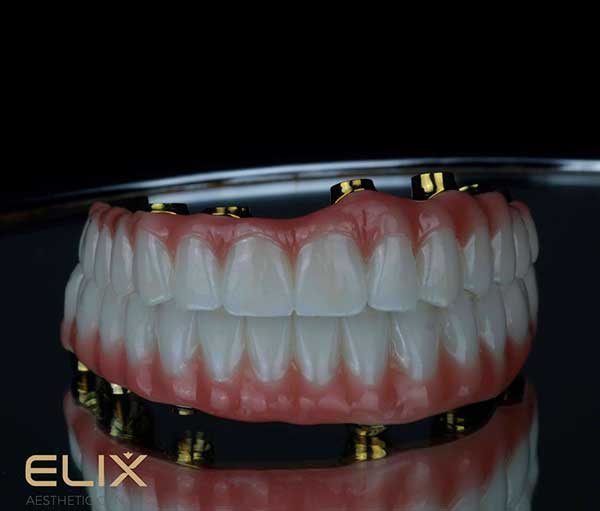
A dental crown is a tooth-shaped, individual restoration that covers a natural tooth and helps restore its shape and function. Dental crowns can also be used on implants.
A dental crown may be needed:
➫ in the case of a significantly damaged or weakened tooth
➫ to restore a broken or worn tooth
➫ in some cases after root canal treatment
➫ to restore the shape and appearance of a tooth
➫ to restore a tooth on an implant.
Main types of crowns:
In modern dentistry, crowns made of various materials are used. The choice of material is made individually, depending on the clinical situation and the desired result.
Ceramic crowns
One of the main advantages of ceramic crowns is natural aesthetics. Modern ceramics allow you to reproduce the color and transparency of natural teeth, which makes them especially suitable for areas with high aesthetic requirements.
Zirconia-ceramic crowns
In the zirconia-ceramic version, the zirconia base can be combined with an outer ceramic layer.
This approach makes it possible to combine strength and a natural appearance.
Modern zirconia materials are widely used in the restoration of both anterior and posterior teeth, in case of appropriate clinical indications.
Metal-ceramic crowns
A metal-ceramic crown has a metal base and an outer ceramic layer.
It is a long-standing and well-known option for its durability.
At the same time, modern all-ceramic solutions in some cases allow for a more natural aesthetic result.
Which crown to choose
The choice between ceramic, zirconium-ceramic or metal-ceramic crowns is not only a matter of price or appearance.
The doctor takes into account the position of the tooth to be restored, the condition of the remaining natural tissues, the bite, the chewing load and the aesthetic requirements of the patient.
Therefore, there is no single “best” crown for everyone, the right option is determined after an individual diagnosis.
How is a crown placed
First, the doctor assesses the condition of the tooth and surrounding tissues. After the necessary treatment, the tooth is prepared, a size is taken or a digital scan is performed, and an individual crown is made.
Before the final placement, its conformity, shape, color and bite are assessed.
How long do dental crowns last?
The service life depends on the selected material, the quality of preparation and installation, oral hygiene, bite and the patient's habits. Dental crowns also require daily care and regular dental check-ups.
Dental crown prices in Yerevan
The cost of dental crowns may vary depending on the selected material, preparation technology, the number of teeth to be restored and the need for preliminary treatment.
At Elix Clinic, the appropriate option and the final cost of treatment are determined after consultation and diagnosis.
When choosing a dental crown, it is important to combine functionality, strength and natural aesthetics.
At Elix Clinic, the selection of ceramic, zirconium-ceramic and metal-ceramic dental crowns is made individually, according to the condition of the tooth and the patient's requirements.