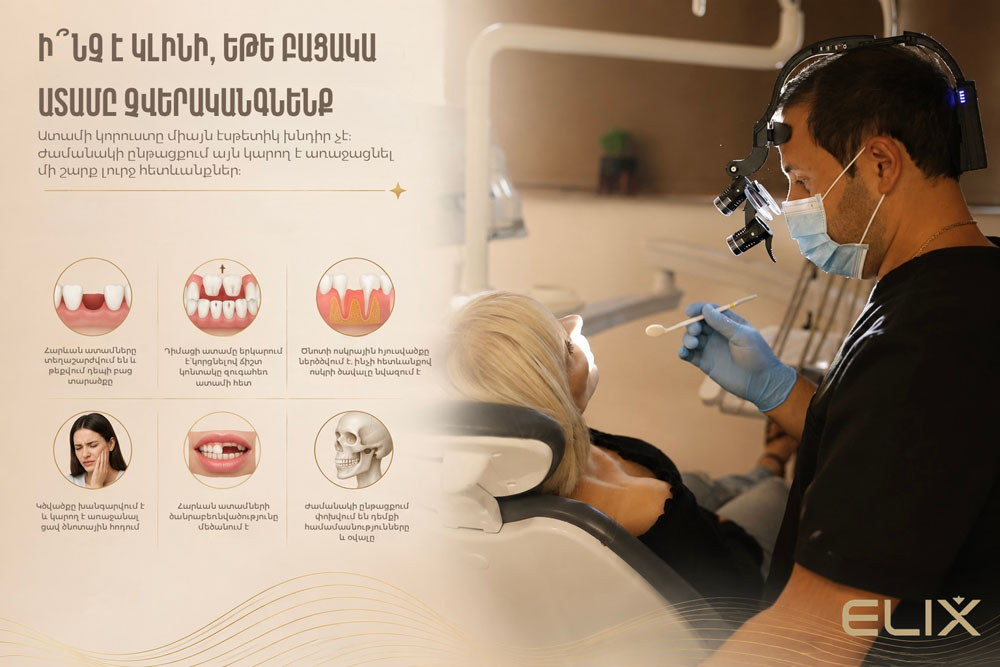
What happens if a lost tooth is not restored
Many people think that if only one tooth is missing and it is not in a visible area, then treatment can be postponed. However, in reality, even one lost tooth can affect the health of the entire oral cavity over time.
In 2026, dentists emphasize not only the restoration of the tooth, but also the right choice of time for it. The longer a tooth is missing, the greater the likelihood of further complications.
The first change occurs in the bone tissue. In the absence of a tooth root, the jaw bone begins to gradually lose its volume. This process is natural, but it can complicate subsequent implantation and require additional treatment.
In addition, neighboring teeth begin to shift into the empty space. As a result, the bite changes, the load on some teeth increases, and new problems may arise.
The long-term absence of a lost tooth can also affect the efficiency of chewing. Many people start chewing on only one side, which can cause tension in the jaw joints and muscles.
In modern dentistry, one of the most reliable solutions for restoring a lost tooth is considered to be implantation. At Elix Clinic, an individual diagnosis is performed for each patient and an appropriate treatment plan is drawn up.
Frequently Asked Questions
Is it possible to live for years without one tooth
It is possible, but over time, bone loss, tooth displacement, and bite changes may occur.
Does bone really regrow
Yes. In the absence of a tooth root, bone tissue begins to gradually decay.
What is the best solution for a lost tooth
In most cases, one of the best options is a dental implant, as it restores both function and aesthetics.