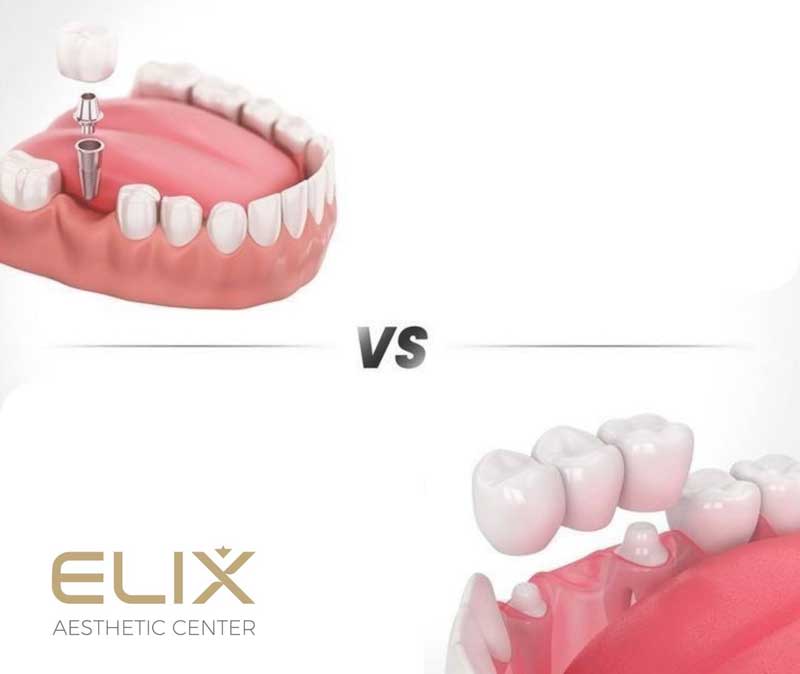
Implant or Crown: Which to Choose?
When it comes to restoring a lost or damaged tooth, the obvious question arises: which is better – a crown or an implant?
Both options have their indications, advantages, and limitations.
Let's explore the differences in detail and choose the one that's right for you.
What is a dental implant?
A dental implant is a titanium "root" that is implanted into the jawbone and serves as the foundation for a future prosthesis.
Imagine a small titanium screw that "grows" into the bone and acts as the root of a lost tooth. A crown is attached to it, which is visually and functionally indistinguishable from a natural tooth.
What is a dental crown?
A crown is a kind of "cap" that is placed over a tooth or part of a tooth to restore its shape, color, and function.
It is used when a tooth is severely damaged, but the root is preserved. A crown protects the tooth from further damage and restores its natural appearance.
When is an implant indicated?
An implant is necessary if:
➫ a tooth is completely missing;
➫ the root is damaged so much that it cannot be saved;
➫ there is edentia or several adjacent teeth need to be replaced.
When is an implant contraindicated:
➫ severe chronic diseases;
➫ oncological diseases;
➫ serious bone problems.
Temporary restrictions may include pregnancy or exacerbation of chronic diseases. The final decision is made by the doctor. Contraindications can often be eliminated by gum treatment or bone restoration (sinus lift).
When is a crown indicated?
A crown is the optimal option if:
➫ a healthy root is preserved;
➫ the crown is broken or damaged;
➫ a quick and affordable solution is needed.
For example, a large fragment of a tooth is broken, old fillings cover more than 50% of the tooth surface, or the tooth is discolored. In all these cases, a crown is an appropriate solution.
When is a crown contraindicated?
➫ Inflammation or damage to the root
➫ Tooth mobility
➫ Severe gum problems
➫ In the presence of baby teeth
➫ General bone deficiency.
Materials and technologies.
Implants.
➫ Titanium (Grade 4) is durable, hypoallergenic, and suitable for almost everyone.
➫ Zirconium has a more natural color and is suitable for metal intolerances.
➫ Modern surface treatments (SLA, SLActive, TiUnite) accelerate implant-bone fusion.
Crowns.
➫ Metal-ceramics are strong and reliable, suitable for chewing teeth, but less aesthetically pleasing.
➫ Zirconia is strong, aesthetically pleasing, and durable.
➫ Pure ceramics are the best solution for anterior teeth.
➫ Metal is affordable and durable, but noticeable, so it is primarily used on posterior teeth.
Treatment stages
Implant treatment stages
1. The dentist examines and selects a suitable implant.
2. A titanium screw (the new "root") is inserted.
3. The implant heals within 2-6 months.
4. The abutment (connecting part) is installed.
5. The final stage is the placement of the crown.
If there is insufficient bone tissue, bone grafting or a sinus lift is performed.
Crown treatment stages:
1. Tooth preparation and polishing.
2. Taking an impression.
3. Fabricating the prosthesis.
4. Trying in and cementing the crown.
Lifespan.
Implant.
➫ Typically lasts 10-20 years, and with proper care, over 25 years.
Crown.
➫ Metal-ceramic: 10-15 years,
➫ Zirconia and ceramic: 15-20 years,
➫ Metal: sometimes over 20 years.
Price Difference
➫ An implant is more expensive because it includes a screw, abutment, crown, and, if necessary, additional procedures.
➫ A crown is more affordable because the root is preserved, and the price depends on the material.
Advantages and Disadvantages:
Implant.
➫ Completely restores the tooth,
➫ Does not damage adjacent teeth,
➫ Has a natural appearance,
➫ Lasts for decades.
Disadvantages:
➫ Higher price,
➫ Longer treatment time,
➫ Contraindications.
Crown.
➫ More affordable and quicker option,
➫ Preserves the natural root,
➫ Does not require complex surgery.